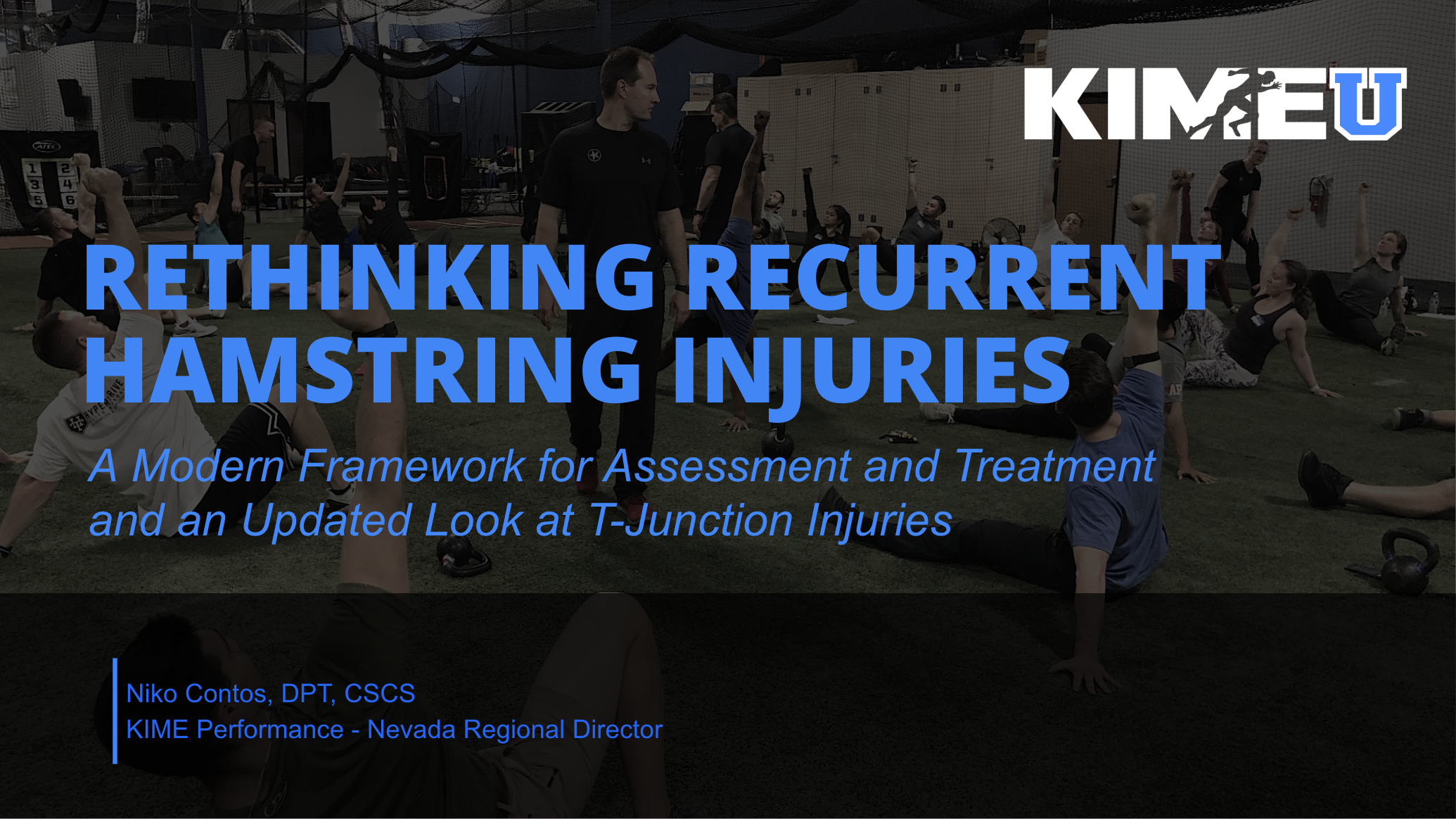
Continue the Learning from Reno
You were part of the conversation — now here are the key concepts, frameworks, and clinical takeaways from Niko Contos’ session on recurrent hamstring injuries and T-junction considerations.

Key Takeaways from the Session

Recurrent Injuries Are Rising
Hamstring injuries remain the most frequent muscle injury with increasing reinjury rates and time loss across sport.

Not All Hamstrings Are the Same
Different muscles contribute differently — from force production to sprint strain — requiring more targeted evaluation and treatment.

T-Junction Injuries Are Common — and Missed
Up to ~50% of distal hamstring injuries involve the T-junction, with high reinjury rates if not properly identified.

Move Beyond Protocols → Use Frameworks
Shift from timeline-based rehab to criteria-based progression across:
Pain → Motion → Strength → Speed → Performance

Assessment Drives Better Outcomes
Use layered testing:
Palpation
Strength at different lengths
Movement patterns
Neural involvement

Rehab Should Match Tissue + Function
From isometrics → eccentrics → plyometrics
Each phase targets different adaptations and recovery stages
What This Means in Practice
Modern rehab requires more than isolated muscle treatment.
Understanding tissue behavior, movement systems, and injury patterns allows clinicians to:
- Identify root causes earlier
- Reduce reinjury risk
- Progress athletes more effectively
Full Presentation + Clinical Resources
Access the full presentation and continue exploring the KIME evaluation model, frameworks, and clinical applications.
View Full Lecture Materials