
Learning Objectives
Upon completion of this course, participants will be able to:
- Explain the relationship between mobility, fascial preparation, tendon readiness, and speed development.
- Design an effective dynamic warm-up that prepares athletes for high-velocity movement.
- Develop and understand the coaching eye system.
- Differentiate between acceleration mechanics and maximum velocity sprint mechanics.
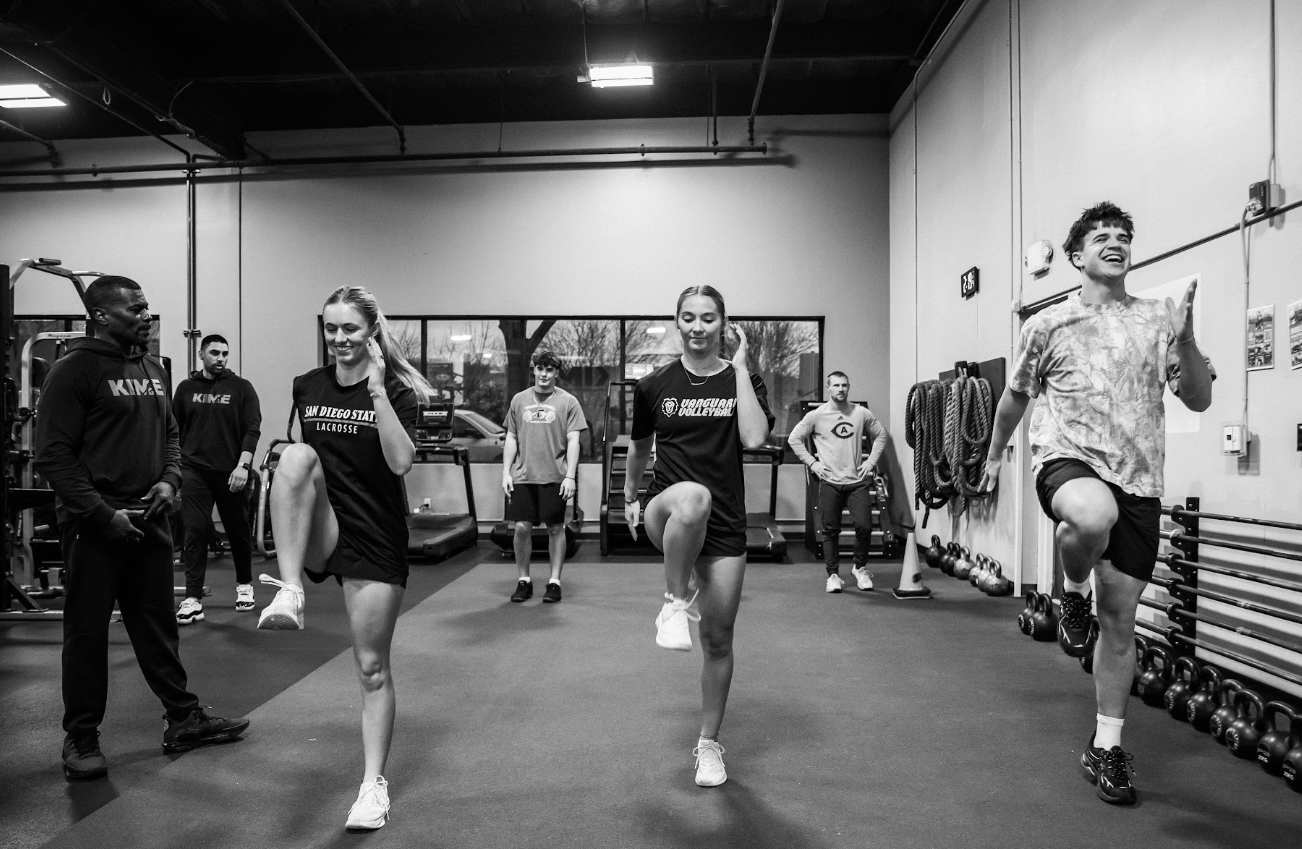
- Demonstrate proper coaching techniques for A-skips, B-skips, high knees, butt kicks, lateral shuffles, and carioca drills.
- Identify common movement faults that limit sprint performance.
- Apply coaching cues that improve posture, arm action, and lower extremity mechanics during acceleration.
- Explain the role of the stretch-shortening cycle in athletic performance.
- Progress plyometric training from low-level elastic drills to advanced reactive exercises.
- Distinguish between concentric power, elastic stiffness, and eccentric control when programming plyometrics.
- Develop introductory acceleration drills that reinforce proper body angles and force application.
- Recognize how strength training transfers to sprint mechanics and athletic performance.
- Integrate speed, agility, and plyometric progressions into a comprehensive performance training program.
- Learn and develop a system around acceleration, deceleration, change of direction, and max velocity