00
DAYS
00
HOURS
00
MINS
00
SECS
Only Dead Men Have Levers
Join our exclusive live event to delve into the biomechanics of tendons, adaptation strategies, and rehabilitation techniques for optimal tissue health.
What if the way we’ve been taught to think about the body—as a system of levers—is incomplete?
Human movement is more complex than a system of rigid bones, joints, and levers.
In Only Dead Men Have Levers, Evan Hauger challenges traditional biomechanic models and explores a more dynamic way of understanding movement—one that accounts for the individual in front of you.
From expansion and compression to structural archetypes and neurological motor signatures, Evan examines how the body manages force, adapts to its environment, and develops recognizable movement strategies over time.
The goal isn’t to find one “perfect” way to move. It’s to better understand the hardware, software, and environment influencing movement so clinicians can recognize individual differences and create better conditions for efficient performance.
Learning Objectives
By the end of this workshop, participants will be able to:
1. Navigating Human Movement — Beyond the Traditional Lever Model
- Explain why human movement cannot be fully understood through rigid lever and fulcrum models alone.
- Describe how structure, strategy, and environment interact to create movement.
- Recognize the role of expansion, compression, fluid, and tissue deformation in the transmission and management of force.
2. Structure Drives Function — Understanding Structural Archetypes
- Identify how differences in body shape and structure can influence available movement strategies.
- Explore relationships between the thorax, pelvis, and broader structural characteristics of the body.
- Recognize why applying the same movement solution to every individual can become a “square peg, round hole” approach.
3. Motor Signature — Recognizing Individual Movement Strategy
- Define the concept of a motor signature and how repeated movement strategies become characteristic of an individual.
- Compare qualities associated with more horizontal/grounded and vertical/aerial movement strategies.
- Examine characteristics including center of mass, foot preference, rib-cage structure, muscular versus elastic strategies, rate of force development, and hip motion.
4. Integration — Hardware + Software + Environment
- Connect an individual’s structural archetype (“hardware”) with their motor signature (“software”).
- Consider how environmental and task demands influence the movement strategy an individual selects.
- Apply a more individualized framework for creating environments that allow people to find efficient movement solutions.
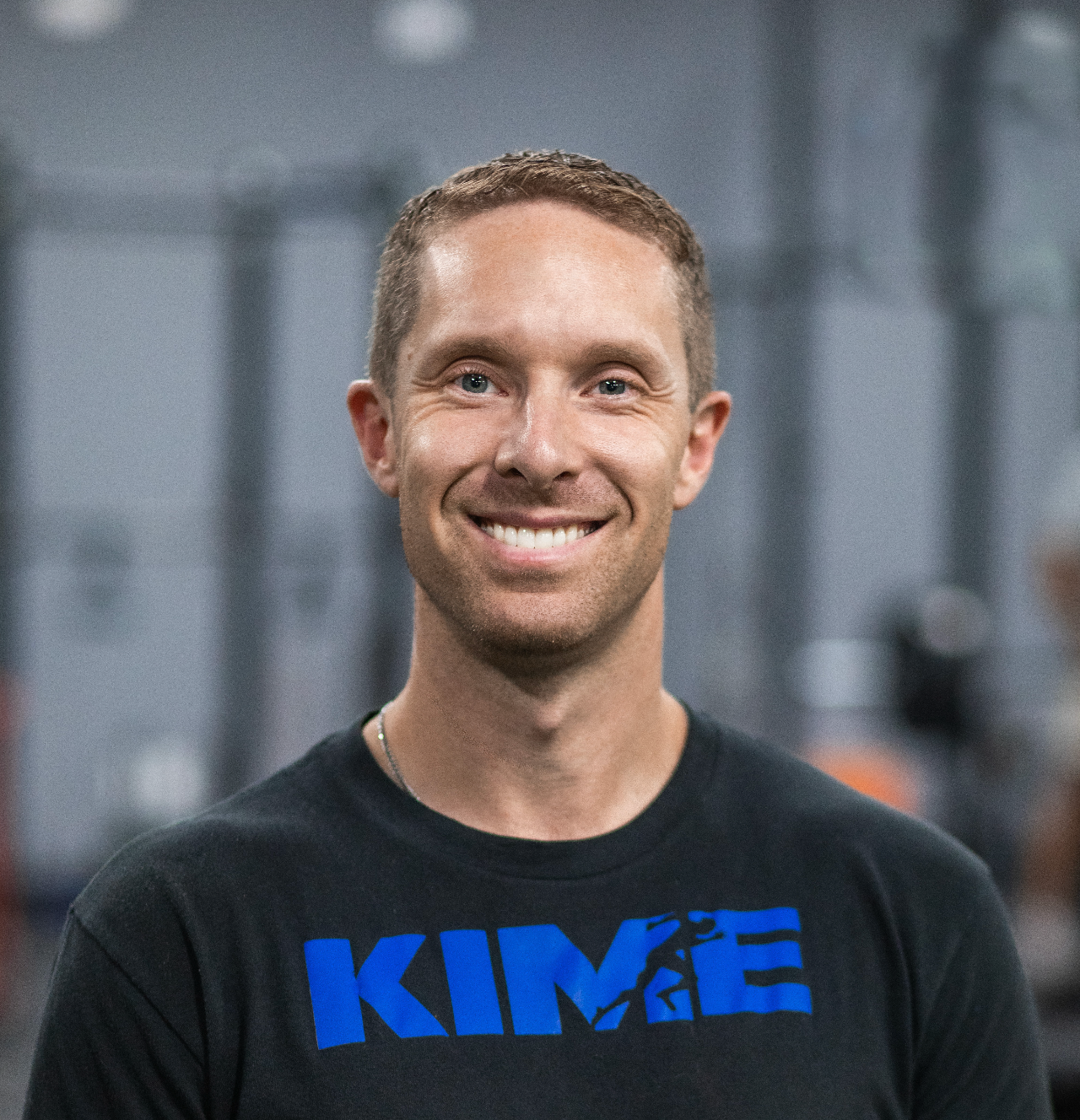
Meet our KIMEU Instructor
Dr. Evan Hauger, PT, DPT, SFG I
Evan is a sports physical therapist, strength and conditioning professional, and StrongFirst Certified Level 1 instructor with a deep background in athletic performance and human movement.
A former multisport athlete and collegiate baseball player at Shasta College, Evan’s own experiences with injury helped shape his interest in how people move, recover, and perform. He earned his Doctorate in Physical Therapy from Sacramento State University and has since worked with athletes across the MLB, NFL, NBA, UFC, Olympic, and collegiate levels.
His experience also includes training alongside leading sports physical therapy professionals in Boston, serving as a medical team leader for the USA Track & Field National Championships, supporting NFL Combine preparation at EXOS in Phoenix, and working as a performance coach for Olympic athletes.